Morning Side
A story.

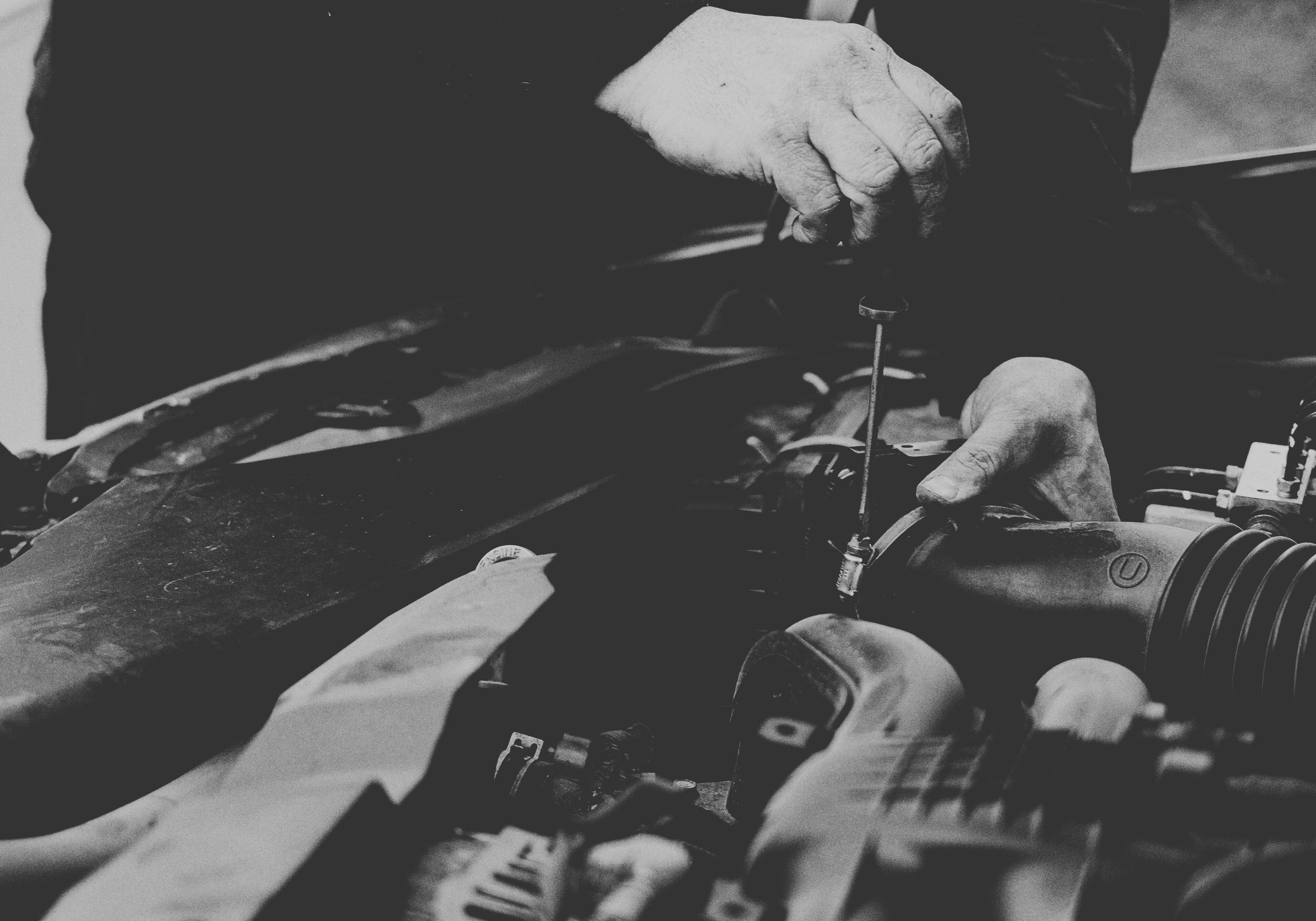
Paul Pitman’s been working on the same truck since about 2004. Hood up every weekend, same as always. He’s got a system the way he folds his rags, tools laid out on a piece of cardboard so they don’t scratch the driveway.
I don’t know what he’s fixing no more. Maybe he don’t neither.
He’s the kind of man writes notes to hisself on the back of envelopes. Grocery lists, things to check on the truck, I don’t know what else. I seen ‘em on his dash when I walked by once, covered in his small, careful handwriting.
Seventy-three years old. Retired out of the county road crew. Never married, though there was a woman named Darlene for a while in the eighties that he don’t talk about. His brother Chuck moved to Columbus and they had some kind of falling out that nobody’s got the full story on.
He fixes things. That’s just what he does. Your gutters, your fence post, your daughter’s brakes, your lawnmower. He don’t charge what he should. He don’t gamble, don’t drink much, keeps his grass cut even when his back’s giving him trouble.
First week of May, every year, he gets the truck running. Takes it out Colerain Pike and back. I seen him do it. Driving with his elbow out the window and the radio on low. Then he pulls back in and lifts the hood again.
He’s got a parakeet named something I can’t never remember. Green one he keeps in the kitchen by the window so it gets the morning light.
I noticed the bottles on his counter when I stopped by to return his post hole digger. Metoprolol. Aspirin, the low dose. He didn’t mention them and I didn’t ask.
New Year’s Day he puts black-eyed peas on the stove. Always has. Told me once his mother did it, said it was for luck, and he kept doing it after she passed because it felt wrong not to. He don’t know if he believes that. He believes in God more the way a man believes in the structural integrity of a bridge, not thinking about it much until he has to cross.
The front porch light burned out sometime in November. He hadn’t replaced it by December. I don’t know why I kept noticing that. Maybe because Paul notices everything. Fixes everything. And that bulb just sat dead.
I knocked in February to check on him. His car was there. It took him a while to answer and when he did he was holding his left arm against his side.
“You alright?” I asked.
“Fine,” he said.
I asked if he wanted me to drive him somewhere and he said no, he was fine, he’d been having some muscle soreness and it was nothing.
I went home. I shouldn’t have gone home.
When I came back the next morning there was a prescription bottle on the porch railing, cap off, empty, like he’d set it down and forgot it. His truck hadn’t moved.
The parakeet was going off inside. Just raising hell.
I broke the window on the back door to get in and I ain’t sorry about it.
They don’t make many Pauls no more. I know that sounds like a stupid thing to say about a man. But I mean the whole of him, the kind of man who saves bent nails in a coffee can, and shows up without being asked, who writes careful notes to hisself on the backs of things and works on the same problem for ten years because giving up on it ain’t never crossed his mind.
His brother Chuck came for the arrangements. First time back in sixteen years.
He stood in Paul’s kitchen looking at the tools on the counter and the notepad by the phone and the parakeet in the window and he said, “I didn’t know it was like this for him.”
I didn’t say nothin’. What was there to say.
The parakeet’s at my place now. I put it by the window, morning side, the way Paul had it.
I don’t know what it says. Just the same few sounds, over and over.
Thanks for reading!
Author’s Note: My pap died when I was 14 and I think about him sometimes, think about how I wish I could have known him. You know what I mean, really known him, the way you want to know someone, what’s in their heart and their soul and what makes them cry and what makes them laugh and I never got to know him that way. I know the surface. I know he dragged logs on the beach to make runways for planes in the war. I know he came back from the war and worked the steel mill for the next forty years. I know he liked his tools organized and spent his weekends cutting his grass and trimming his hedges. I know he liked to make things out of wood and I know he took care of my grandma until the day he died. But I didn’t know him. And I sure wish I’d had the chance.
Great voice in this.
Here you go making me teary eyed at work. But really this was a very sweet story. I know very well what you mean in your excerpt at the end, wishing to have known someone in their entirety and not just the role they played in your life.